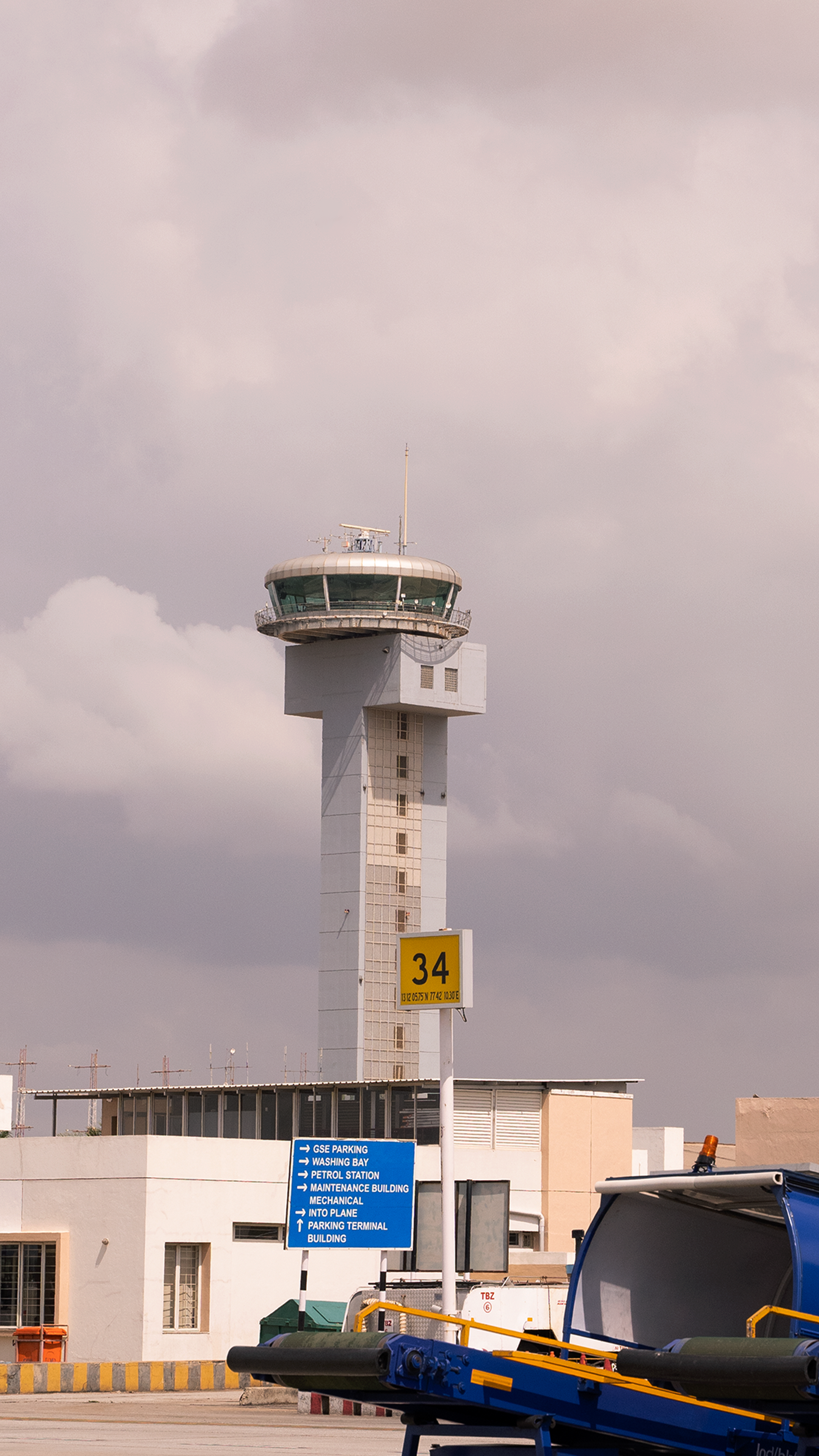
For the family of an Indian national living in Saudi Arabia, Thursday brought confirmation of a loss that began with an explosion late Wednesday night. Saudi Arabia’s Civil Aviation Authority announced that the death toll from the attack on King Fahd International Airport had risen to two: a Saudi citizen and the Indian resident, both killed when the strike hit the night before. Eight other people were injured.
The Houthi rebels claimed responsibility for the airport strike in a statement posted Thursday on Telegram. Houthi military spokesperson Yahya Saree also said the group had targeted an Aramco facility in Yanbu that ignited a fire, as well as the Saudi Defense Ministry in Riyadh, though he offered no evidence for the claimed ministry strike. King Fahd Airport, located in the country’s east near Bahrain and Qatar, has been attacked previously amid a wider wave of Houthi missile and projectile strikes against major Saudi airports.
The human toll of the conflict extends well beyond that one night. Yemen’s Defense Ministry issued a warning Thursday that rallies and mobilization programs staged by the Iranian-backed Houthis will now be considered legitimate military targets, and it cautioned residents in Houthi-held areas against taking part. The announcement, made on social media, is viewed as a major escalation against the Houthis and the civilians living under their control. Pro-Houthi rallies are regularly held on Fridays, the Muslim day of prayer. The ministry also said the Houthis are mobilizing children for combat. Under international law, deliberate attacks on civilians could constitute a war crime. Rallies and what the Houthis call “cultural courses” remain among the group’s main tools for recruiting supporters and fighters.
Meanwhile, at sea, the war is reshaping how oil moves, and the people who move it. Iran’s state television reported Thursday that seven oil tankers caught fire and were damaged overnight after being targeted or striking naval mines in the Strait of Hormuz. Quoting a statement from the Revolutionary Guard’s navy, the report said four of the tankers were transferring oil when they were targeted and caught fire, while three more were damaged and immobilized after hitting naval mines. No details were given about possible casualties or the tankers’ flags. If verified, it would be the largest single-day number of vessels damaged in the waterway since the Iran war began on Feb. 28, when the United States and Israel launched joint strikes against Iran.
For tanker crews still willing to make the voyage, the journey has become a careful, dangerous ritual. Lloyd’s List Intelligence, a shipping data and analysis company, said Thursday that operators have been transporting oil from Gulf producers through the strait at night, using a U.S. military-protected lane near Oman’s coast with their location systems and mobile phones switched off. The oil is then transferred to other tankers waiting in the Gulf of Oman for shipment to customers in Asia.
Saudi oil company Aramco, whose sites have been targeted by the Houthis, has responded by moving more oil overland. President and CEO Amin Nasser told Saudi-owned Al Arabiya Business that the volume flowing through the East-West pipeline, which bypasses the Strait of Hormuz, has more than tripled, surging from 2 million to 7 million barrels each day. Built in the early 1980s, the pipeline has played a crucial role in Saudi Arabia’s ability to export oil since the strait was disrupted by the war. Nasser added that the company has used drones to assess damage from oilfield attacks and to help with firefighting.
Diplomacy continues alongside the fighting. United Nations Secretary-General António Guterres said Egypt has a vital role to play in resolving the Middle East crisis, citing its “defense of the rights of the Palestinian people” and its mediation in the U.S.-Iran conflict. Guterres, due to arrive in Egypt on Friday, said he would also discuss the war in neighboring Sudan, the situation in Libya, and hostilities in Yemen, including the siege of Taiz and Houthi attacks on civilian targets in Saudi Arabia, which he called “totally unacceptable.”
In Gaza, hospital officials said at least four people were killed and several others wounded Thursday in Israeli strikes and gunfire. Shifa Hospital reported one person killed when a car was struck in Gaza City, and a woman killed by Israeli military fire in Jabaliya, in the north. Nasser Hospital said another person was killed and others wounded in a strike on a street gathering in Khan Younis, in the south, while Awda Hospital reported one death from a strike on a refugee camp in Nuseirat, in the central region. The Israeli military said the strikes targeted Hamas fighters, said it was not immediately aware of the Jabaliya incident, and did not immediately comment on the Nuseirat strike.
Iran, meanwhile, used state television to show off dozens of military drones it claimed are more powerful and sophisticated than earlier versions. The drones were shown in an underground location, and the report said a new version of the “Arash” drone now carries a 100 kg (220-pound) warhead, twice as powerful as before. Iranian Army Chief Gen. Amir Hatami was cited by state television’s website as saying Iran has “reached a significant level of maturity in the field of drones and unmanned systems in general,” adding that more drones will be unveiled in the future. Whether those new weapons will reach the tanker crews and airport workers already living under fire remains the question that hangs over the region.