Macron's Gulf Tour: What It Means for French Households
Fuel deals and defence pacts tested by protests at home
As President Emmanuel Macron tours the Gulf, the stakes for ordinary people in France could hardly be higher. The three-day trip, which has already taken in Kuwait and the United Arab Emirates and continues to Qatar and Bahrain, is unfolding against a backdrop of violent protests at home, petrol stations running dry, and energy prices that have strained household budgets across Europe. For French citizens, the question is not one of diplomacy but of daily life: whether fuel will reach the pumps, whether public services can be sustained, and whether their government can ease a cost-of-living crisis that has brought hundreds of thousands onto the streets.
The public pressure is acute. More than half a million people gathered across France on Saturday, demanding better education infrastructure and government action on living costs. Protesters have rallied against the crumbling state of French schools and planned pay freezes for public-sector workers. Authorities have imposed curfews in some cities. During weeks of unrest, more than 2,500 people have been arrested, and demonstrations have descended into looting and arson in numerous locations. The protests were triggered by a proposed government budget seeking tens of millions of euros in savings to public spending, and a major driver of public anger has been the spike in energy prices affecting all of Europe, much of it a consequence of the US-Israel war on Iran.
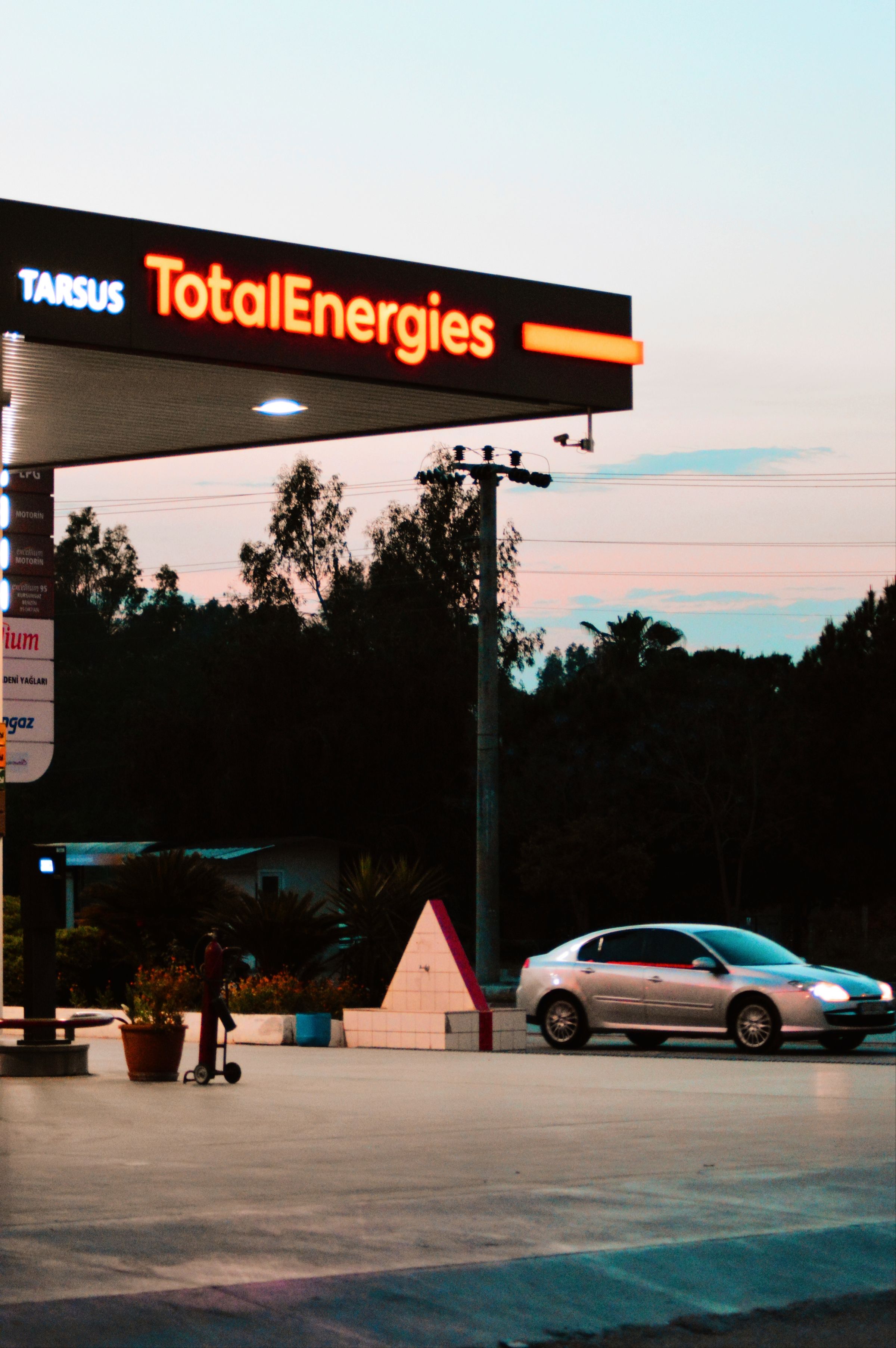
The practical effects on citizens are already visible. Disruptions to the supply of refined oil products such as petrol and diesel, caused by the conflict in the Strait of Hormuz, have left up to 20 percent of French petrol stations without both fuels at various times since the conflict began. Oil prices hover above $100 a barrel. It is against this civic emergency that Macron arrived in the Gulf, accompanied by senior executives from France’s two biggest energy groups, TotalEnergies and Engie, seeking new suppliers for a public that depends on them.
Those suppliers appear to have been secured. On Tuesday, the UAE committed to supplying 100,000 tonnes, or 746,000 barrels, of diesel per month to France for an unspecified duration, according to Bloomberg. Bahrain has agreed to provide 100,000 tonnes of diesel per month, also for an unspecified duration, while Saudi Arabia will deliver 95,000 tonnes in each of October and November, via TotalEnergies.
Meanwhile, the trip has produced broader cooperation. On its first day, France and Kuwait signed eight agreements and cooperation documents covering defence, artificial intelligence, investment and more. Macron then met UAE President Sheikh Mohamed bin Zayed Al Nahyan in Abu Dhabi on Monday, where the two leaders reaffirmed their commitment to advancing cooperation in energy, advanced technology and artificial intelligence. According to the French Foreign Ministry, the UAE is France’s biggest importer in the Gulf, with bilateral trade standing at 10.8 billion euros ($12.1bn) in 2025. According to the Stockholm International Peace Research Institute, France supplied 18 percent of the UAE’s arms and defence imports in 2025, the second highest after the United States, at 42 percent.
Analysts frame the visit as part of a wider shift with consequences for citizens on both sides. Andreas Krieg, a senior lecturer at King’s College London’s School of Security Studies, told Al Jazeera that Macron’s visit is “symptomatic of a much larger geopolitical transformation”. “We are witnessing the gradual emergence of a post-American Middle East in which Washington remains militarily powerful but increasingly struggles to exercise the political leadership it once enjoyed,” he said. “Europe and the Gulf now face a remarkably similar strategic challenge. Both have become excessively dependent on American security decisions, and both are discovering that this dependence carries substantial economic and political costs.” That dependence, and its costs, ultimately land on the publics who rely on stable energy and security arrangements.
France is also looking to boost its own exports, particularly defence equipment to the Gulf, as the country carries its highest national debt since the immediate aftermath of World War II, analysts say. It has already strengthened its military partnership with Saudi Arabia, which has been battling the Iran-backed Houthi group from Yemen. Last month, Macron said France would send troops and defence systems to Saudi Arabia to help protect the Red Sea port of Yanbu, which is crucial for energy transport. Oil installations and airports in Saudi Arabia have come under attack from the Houthis. In late September, Macron said France would deploy what he termed “military means” to help protect the Yanbu Red Sea oil terminal, stating in a TV interview that “soldiers, radars, defence systems” would be sent. The Saudi East-West Pipeline, which carries oil from eastern fields to the Red Sea and is the country’s main means of exporting while the Strait of Hormuz remains disrupted, has come under attack during the Iran conflict, and the Houthis have also attacked Saudi ships in the Red Sea. Le Monde described the move as “a geopolitical shift”, noting that defence cooperation between the two countries had previously been “discreet, ambiguous and marked by extreme caution when it came to defining it”. Last week, France’s Foreign Ministry spokesperson, Pascal Confavreux, said “operational elements” to defend Saudi oil facilities had been put into action, without specifying which means had been sent. On Monday, French Foreign Minister Jean-Noel Barrot met his Saudi counterpart, Prince Faisal bin Farhan Al Saud, to review bilateral relations and reaffirmed France’s solidarity with Saudi Arabia amid the Houthi attacks.
Krieg assesses that France can offer Gulf states military capabilities not entirely dependent on the US, something he called “increasingly valuable”. “France can offer defence industrial cooperation, technology transfers, joint production, training and greater operational autonomy,” he said. But he also cautioned that the “central strategic dilemma” for France is whether deeper involvement could draw it into the conflict. “Consider the protection of Saudi energy infrastructure against Houthi attacks,” he said. “French air defence systems intercepting missiles would directly undermine the Houthis’ military strategy. If French forces are subsequently targeted, Paris could face pressure to retaliate. What begins as a defensive deployment could gradually become an operational commitment with much wider implications.” The same, he noted, applies to naval deployments around the Strait of Hormuz, where “escalation in one theatre can rapidly affect another”.
France’s ties with Iran are already strained. In July and August, France strongly condemned Iranian attacks on ships in the Strait of Hormuz. In July, two French Embassy staff members were detained in Tehran and declared personae non gratae, with Iran’s Foreign Ministry saying the diplomats had “interfered in Iran’s internal affairs under the pretext of engaging with civil society”. In August, Barrot expelled two Iranian diplomats in retaliation.
By contrast, Washington’s own posture is shifting. At the Global Security Forum in Doha on Tuesday, US Envoy Tom Barrack, who serves as US ambassador to Turkiye and special envoy for Syria, said the US is moving away from its traditional security-for-oil relationship with the Middle East. “The US no longer wants to own,” he said. “The bargain is not to control, but to not leave. We’re not leaving.” He acknowledged that regional partners, after months of Iranian strikes on their infrastructure, increasingly recognise the limits of US involvement. In August, Saudi Arabia, Turkiye and Pakistan signed the trilateral Mecca Joint Defence Agreement, which has been activated amid the Houthi attacks. Krieg said Gulf states do not believe France will replace the US, whose military and intelligence infrastructure remains “unmatched”; rather, they want a “diversified network of security partnerships”. “France is particularly attractive because it possesses genuine expeditionary capabilities and has demonstrated a willingness to defend Gulf partners without joining Washington’s offensive campaign against Iran,” he said.
For readers seeking wider context on France’s energy and security positioning, coverage is available at https://www.aljazeera.com/news/2026/10/20/as-macron-visits-gulf-can-france-forge-its-own-energy-for-security-future. What remains clear is that the outcome of this tour will be measured not only in agreements signed but in whether fuel flows, prices stabilise and public services survive the months ahead for the people of France and the Gulf alike.
Q&A
How have fuel shortages affected French citizens?
Disruptions to refined oil product supplies caused by the conflict in the Strait of Hormuz have left up to 20 percent of French petrol stations without both petrol and diesel at various times since the conflict began.
What fuel supply commitments did Gulf states make to France?
The UAE committed to 100,000 tonnes (746,000 barrels) of diesel per month, Bahrain agreed to 100,000 tonnes per month, and Saudi Arabia will deliver 95,000 tonnes in each of October and November, via TotalEnergies.
What triggered the protests in France?
A proposed government budget seeking tens of millions of euros in savings to public spending, plus a spike in energy prices affecting all of Europe, much of it a consequence of the US-Israel war on Iran.
What military commitments has France made to Saudi Arabia?
France will send troops, radars and defence systems to help protect the Red Sea port of Yanbu, which is crucial for energy transport and has been targeted by the Iran-backed Houthis.