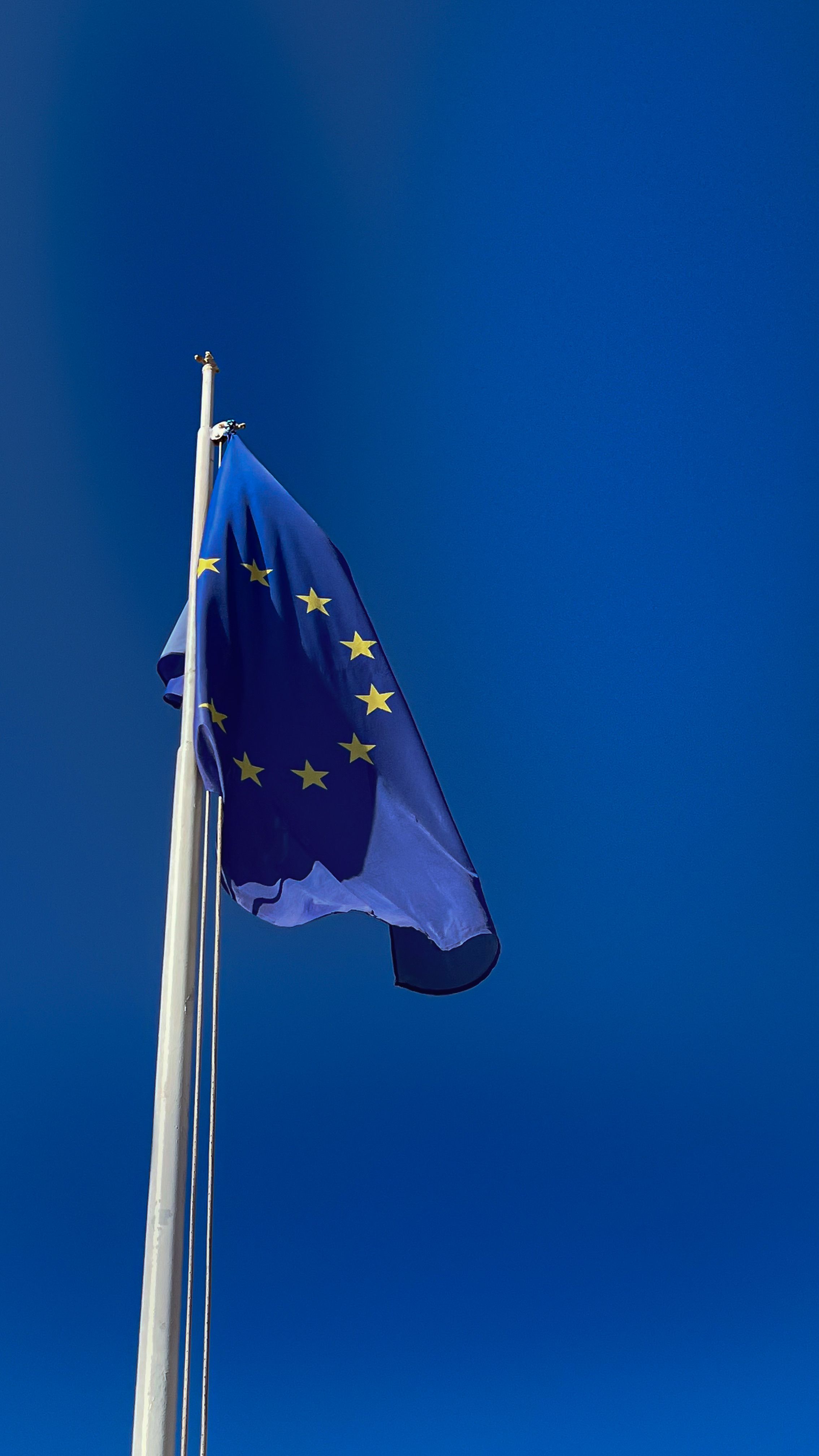
EU Delegation in Oman Ends Years of Relying on Riyadh
Muscat mission ends decades of routing EU business through Riyadh
For decades, anyone in Oman dealing with the European Union, whether a trader, a port official, or a diplomat seeking a meeting, worked through Brussels’ mission in Riyadh, in another country entirely. That changed in July 2026, when the EU announced the opening of a Delegation to the Sultanate of Oman. The move ended an arrangement that had long set Oman apart from Gulf neighbours such as Saudi Arabia, the United Arab Emirates, Kuwait and Qatar, where the EU already maintained direct representation.
EU High Representative for Foreign Affairs and Security Policy Kaja Kallas framed the opening in plainly human terms. “Opening an EU Delegation in Muscat is a milestone in our relations,” she said. “It is a clear signal of our commitment (to Oman, to the Gulf, and to stronger security partnerships with the region. Today, we are expanding our diplomatic footprint where it matters the most.”
Behind the announcement sits a much larger story, one that touches the daily lives of Europeans and Omanis alike. A fuller analysis of the move, published at https://orfme.org/expert-speak/eu-oman-relations-brussels-quiet-strategic-move-amid-a-roaring-conflict/, traces how the decision fits into the geopolitical and geoeconomic transformation underway across the EU’s Eastern and broader Southern neighbourhoods, and why a small Gulf Sultanate has become so relevant to Brussels.
The first thing to understand is that EU-Oman cooperation is not new. It rests on two layers. The first is regional: Oman belongs to the Gulf Cooperation Council, whose relationship with the EU is anchored in the 1989 Cooperation Agreement and deepened after 2022, when the EU presented its first ever Strategy for the region. That strengthening owes much to the Russia-Ukraine war, which disrupted the EU’s established patterns of energy supply, ended long-standing security assumptions, and made enhanced energy cooperation with the Gulf, in hydrocarbons and clean energy alike, a matter of strategic importance for households and industry across Europe.
The second layer is bilateral. In 2018, the European External Action Service and Oman’s Ministry of Foreign Affairs signed a cooperation agreement aimed at strengthening political dialogue and cooperation in sectors of mutual interest, including maritime security and clean energy trade and investment. Maritime security matters here in very concrete ways. In a globalised economy with maritime transport as its “backbone,” disruptions in Middle Eastern waterways can raise global energy prices or cause shortages of commodities such as fertilisers that the EU relies on heavily. Oman is unusually well placed in this picture: apart from Iran, it is the only country whose territorial waters extend into the Strait of Hormuz, and the Southern route through that chokepoint, a key artery of global trade, passes through Omani waters.
Oman has also been a working partner in practice, not just on paper. The EU naval operation EU NAVFOR Atalanta has conducted joint exercises with the Sultanate on multiple occasions, in 2021, 2022 and 2024. As the operation’s website notes, “Oman has been a major partner” of the mission; even during the pandemic it “continued to provide logistical support to the Operation and the Omani ports of Muscat, Duqm and Salalah remained the most frequently used by EU NAVFOR vessels.”
Meanwhile, clean energy offers a second pillar with tangible future stakes. Oman has strong potential as a green hydrogen supplier, an aim embedded in its Vision 2040 national development plan. The International Energy Agency has said the country is “well placed to produce large quantities of renewable hydrogen” thanks to its high-quality renewable resources and vast amounts of land for large-scale projects, potential that resonates with the EU’s own energy transition and diversification goals.
The timing of the Delegation opening also matters. It came amid the Iran war, which has caused widespread uncertainty and disruption. A few weeks into that conflict, before the announcement, EU Special Representative for the Gulf region Luigi Di Maio told the Oman Observer that the Sultanate is “increasingly viewed not as a traditional oil supplier, but as a strategic partner in diplomacy, energy transition and supply chain resilience,” adding, “in a more complex world, partners like Oman are essential.” The Observer’s reporting paraphrased rather than directly quoted Di Maio.
Oman’s distinctive diplomatic role helps explain that view. For decades the Sultanate has acted as a regional broker, reconciling competing interests and providing a setting for backchannel diplomacy. Its foreign minister, Badr Albusaidi, describes the approach as “constructive neutrality.” As he explained, “This means more than just being helpful or prepared to facilitate. It means simultaneously preserving and constructing public international law.” Oman also maintains relatively stable relations with both Washington and Tehran, and direct ties with its fellow GCC states.
What changed: the EU’s move can be read in two ways at once, as a strategic reaction to the current crisis, and as a forward-looking investment in long-term prosperity and stability. As Di Maio’s reported remarks put it, “partnerships with countries able to combine stability, diplomacy and economic openness will become increasingly valuable” amid mounting global uncertainty. Oman is one such partner.
Looking ahead, the EU has kept on the table the option of negotiating a Strategic Partnership Agreement with Oman, an offer extended to each individual GCC state since July 2025. According to the European Commission, the aim of such agreements is “to provide for an ambitious, modern, comprehensive and effective framework for bilateral cooperation tailored to the shared priorities and objectives of the EU and each respective GCC partner.” For the people who live and work along these trade routes, in Omani ports and European industries alike, the instruments now appear to be in place for the EU-Oman relationship to evolve to a new level in the years ahead.
Q&A
When did the EU open its Delegation to Oman?
The EU announced the opening of a Delegation to the Sultanate of Oman in July 2026, ending the previous arrangement of handling Oman affairs through its mission in Riyadh.
Why is Oman strategically important to the EU?
Apart from Iran, Oman is the only country whose territorial waters extend into the Strait of Hormuz, and the Southern route through that chokepoint passes through Omani waters, making it vital for maritime transport, energy supply and commodities like fertilisers.
How has Oman supported EU naval operations?
Oman has been a major partner of EU NAVFOR Atalanta, conducting joint exercises in 2021, 2022 and 2024, providing logistical support even during the pandemic, with the ports of Muscat, Duqm and Salalah the most frequently used by EU NAVFOR vessels.
What role could clean energy play in EU-Oman relations?
Oman has strong potential as a green hydrogen supplier, embedded in its Vision 2040 plan. The International Energy Agency says the country is well placed to produce large quantities of renewable hydrogen, aligning with the EU's energy transition and diversification goals.