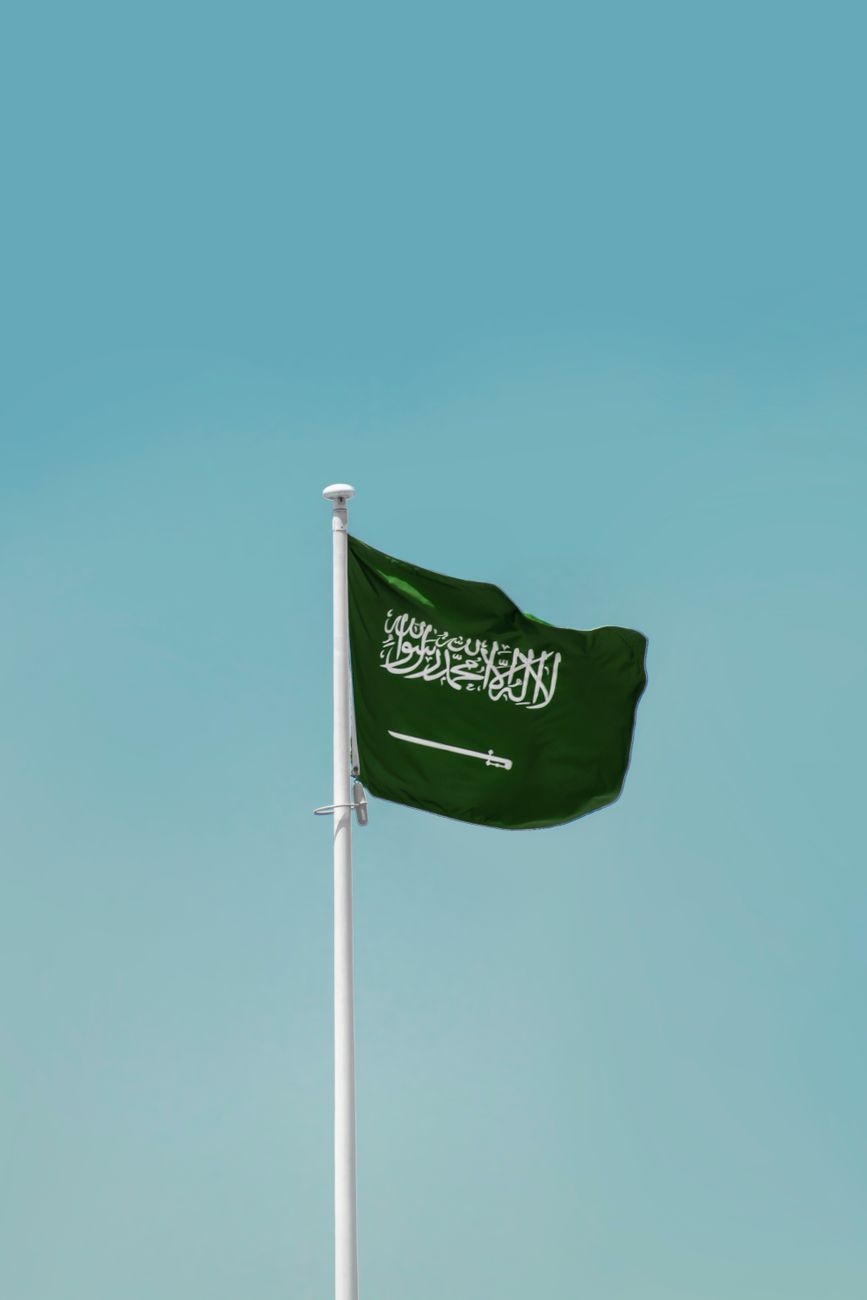
Gulf Residents Weigh What Mecca Pact Means for Their Safety
Smaller Gulf monarchies weigh an unratified pact's promise and risks
For the people of Bahrain, Kuwait, Oman, Qatar and the United Arab Emirates, the signing of the Mecca Joint Defense Agreement on August 7, 2026 turned a distant diplomatic ceremony into a live question about who guarantees their safety, and on what terms. The smaller monarchies of the Gulf now face a regional landscape in which Saudi Arabia, the Arab world’s largest power, has bound itself to Pakistan and Turkey in a pact that could reshape the security environment their societies depend on.
The immediate trigger for that anxiety is renewed fighting between Saudi Arabia and Yemen’s Ansar Allah movement, commonly known as the Houthis. The group’s strikes against the kingdom have raised an obvious question for Riyadh’s two cosignatories: will Pakistan and Turkey be asked to help defend Saudi Arabia in practice? Both Islamabad and Ankara have answered cautiously, seeking to show unequivocal support for Riyadh without being pulled into the quagmire. Neither has rushed to treat the pact as a trigger for war.
That caution reflects a broader truth about the agreement itself. It has yet to be ratified, and much remains unclear about what its security configuration means on the ground. Analysts may be mistaken, in any case, to assume that its primary purpose is a mutual defense alliance of the kind symbolized by NATO’s Article Five. The agreement’s deeper significance may lie in military coordination: institutionalizing security cooperation among Pakistan, Saudi Arabia, and Turkey, pooling capabilities, and extending interoperability. The three countries have already agreed to establish a ministerial committee and a permanent secretariat, steps that could integrate complementary military, industrial, financial, and strategic capabilities. In a Middle East being reshaped by the US-Israeli war on Iran, now in its seventh month, such a framework could prove influential in defining the new regional order.
For the Gulf’s smaller states, the stakes are concrete. They share an interest in de-escalating regional hostilities, but they hold very different views of Saudi leadership in the Arab world, and therefore very different approaches to the security environment developing around them. The pact might strengthen their collective deterrence. It could just as easily sharpen their differences over threat perceptions and partnerships. The agreement may unite Saudi Arabia with states that share Riyadh’s concerns about Israeli aggression and policies to undermine strong Arab states, along with its desire to de-escalate tensions between Iran, Israel, and the United States. Yet the UAE’s alignment with Israel and India represents a competing configuration, one that could emerge as a robust geopolitical bloc challenging the Mecca Agreement, deepening division within the Gulf at a time when the Emirati-Saudi rivalry remains a defining fissure in the Gulf Cooperation Council.
Kuwait and Qatar look, on paper, like the most natural candidates for eventual membership, and Pakistani and Turkish officials have signaled that the configuration will keep its doors open, though only after ratification. Kuwait arguably has the strongest institutional foundation. It ratified a bilateral defense agreement with Pakistan in July 2026, signed an expanded pact the following month, and carries a security partnership with Islamabad dating back to the 1980s, alongside a significant relationship with Turkey and historically close ties with Saudi Arabia. Qatar’s fit is equally strong. It has the most institutionalized military relationship with Turkey of any Gulf Arab state, anchored by the Turkish military base that opened in April 2016, and longstanding defense ties with Pakistan spanning training, air force cooperation, exercises, security assistance, and defense technology. The Israeli attack on Qatar in September 2025 was a traumatic episode that appears to have reinforced doubts in Doha about the reliability of the US security umbrella, doubts only deepened by Iranian attacks on the country in 2025 and 2026. Qatari officials would likely welcome an agreement that complements, rather than substitutes for, their alliance with Washington, though Doha may prefer to study the configuration first, wary of anything that constrains its diplomatic flexibility. Even so, both countries may ultimately choose bilateral cooperation with the three signatories over the obligations of full membership.
Meanwhile, Oman’s calculus is different. With a foreign policy rooted in neutrality, strategic autonomy, dialogue, and mediation, Muscat has traditionally avoided treaty alliances and is unlikely to become a candidate. Yet it is broadly supportive of what the pact seeks to represent. Tensions with Washington, greatly exacerbated by President Donald Trump’s threats to “blow up” Oman, have strengthened its longstanding preference for standing on its own feet. Oman would welcome greater regional burden-sharing, reduced dependence on the United States, and stronger deterrence against Israeli and Iranian attacks on Arab states, three objectives the agreement can, at least on paper, advance. Muscat is thus more likely to be a political supporter than a formal member.
Abu Dhabi is another matter. The UAE has avoided overt criticism of the pact but is probably uneasy about its ramifications. Friction in Emirati-Pakistani relations intensified throughout 2026, with Abu Dhabi increasingly skeptical of Islamabad’s response to Iranian attacks on the UAE and its mediation between Washington and Tehran. Having elevated India over Pakistan as its principal South Asian partner, the UAE is unlikely to welcome Islamabad assuming a more prominent role in Gulf security. Widely perceived as a challenge to the Abraham Accords, the agreement could also conflict with Abu Dhabi’s vision of a regional order anchored in a strategic triangle linking India, Israel, and the UAE. Its refusal to join the July 2026 Saudi-led maritime coalition for freedom of navigation in the Red Sea and Gulf of Aden underscored that reluctance. Still, institutional unease is not outright opposition; Abu Dhabi is likely to practice selective engagement, cooperating where interests converge while avoiding commitments that strengthen a configuration at odds with its own vision.
Bahrain faces perhaps the most delicate balancing act of all. Its exceptionally close ties with both Saudi Arabia and the UAE mean Manama will weigh the preferences of both partners heavily, since it relies on them for security support. Its normalized relationship with Israel may also make it cautious about joining a configuration some observers could read, at least in part, as balancing against Israel as well as Iran. Like Egypt, which is also not a signatory, Bahrain must navigate the Saudi-UAE rivalry carefully, because alienating either would be costly.
Where all this ends depends on choices still ahead. If friction between Riyadh and Abu Dhabi intensifies, the pact could evolve from a mechanism for diversification into a more explicitly defined pillar of a new regional alignment, one side of a broader Eurasian divide in which Pakistan, Saudi Arabia, and Turkey form one axis while Greece, India, Israel, and the UAE form another set of increasingly interconnected relationships, though not two formal alliances. If instead the signatories preserve the pact’s stated defensive and non-exclusive character, it could mature into a flexible framework able to coexist with the GCC, US security partnerships, and other arrangements. For the smaller states of the Gulf, watching from between these possibilities, how they respond may matter as much as what the agreement’s founders intend.
Q&A
What does the Mecca Joint Defense Agreement mean for ordinary Gulf residents?
It turned a distant diplomatic ceremony into a live question about who guarantees their safety and on what terms, especially after renewed fighting between Saudi Arabia and the Houthis.
How have Pakistan and Turkey responded to renewed Houthi strikes on Saudi Arabia?
Both have answered cautiously, showing unequivocal support for Riyadh without treating the pact as a trigger for war, and neither has rushed into the conflict.
Which Gulf states are most likely to join the pact later?
Kuwait and Qatar look like the most natural candidates, with strong institutional ties to Pakistan and Turkey; Oman is likely to remain a political supporter only, and the UAE is uneasy about the pact.
Why does Bahrain face the most delicate balancing act?
It relies heavily on Saudi Arabia and the UAE for security support, and its normalized relationship with Israel makes it cautious about joining a configuration some could read as balancing against Israel.